

I have eaten plain chicken and rice for nine days straight, and the worst part is that nobody made me do it. That is the trap with macro dieting. The math is easy enough to run, so you find four meals that fit and then you eat those four meals until the sight of them makes you tired, and somewhere in week three the plan quietly falls apart. Boredom is what ends most cuts, not hunger.
So this list is built around variety that still hits the numbers. Every recipe here has its macros listed per serving, so you can slot it straight into whatever split you are running, and most of them prep ahead without turning to mush by Wednesday. I have grouped them by breakfast, lunch, dinner, and snacks so you can scroll to whichever meal you are currently sick of.
Macro Friendly Breakfast Recipes
1. Veggie Omelet with Spinach and Feta
Macros per serving:
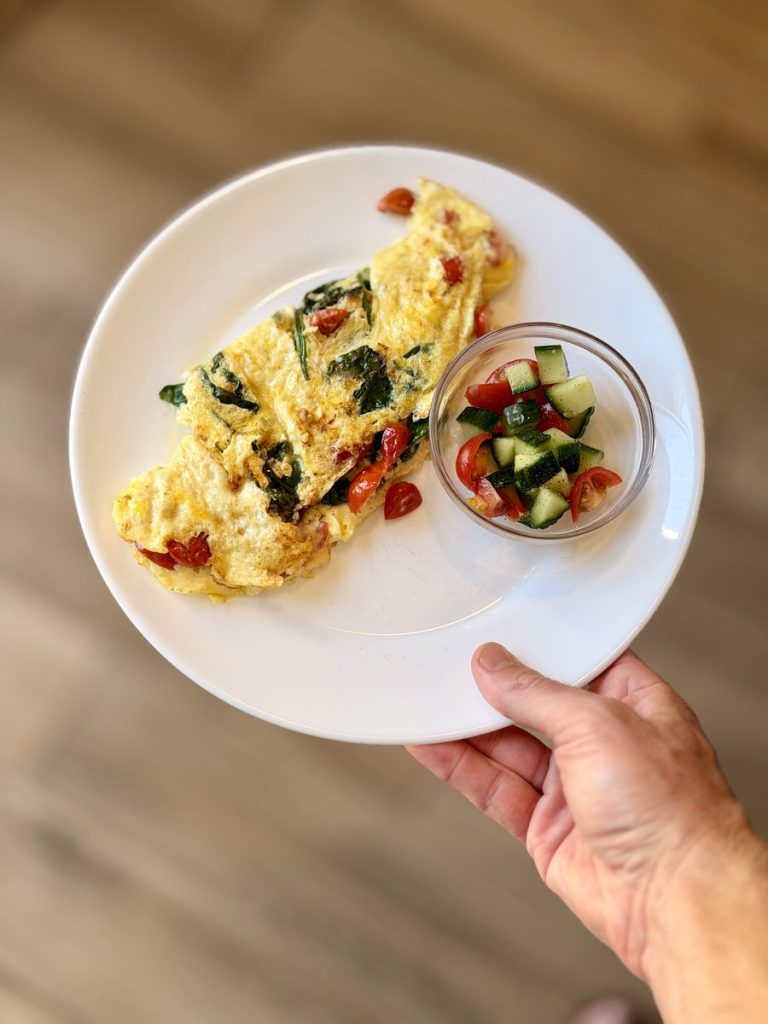
Calories: 295 cals; Fat: 21g; Carbs: 4g; Protein: 22g
Spinach cooks down to almost nothing, which is the whole reason you can get a fistful of it into breakfast without noticing. Wilt it in the pan first and squeeze out the water before the eggs go in, because a wet omelet will not fold and it will not hold its shape either. Thirty grams of feta is enough for the whole thing to taste like something, so weigh it once and learn what that looks like. This is my default when I have twelve minutes and no plan.
Prep ahead: Wilt the spinach and crumble the feta up to 3 days ahead so the pan work is 4 minutes. Keeps 2 days cooked. Reheat 30 seconds covered, though this one is genuinely better made fresh.
2. Broccoli and Cheese Egg Muffins
Macros per serving:
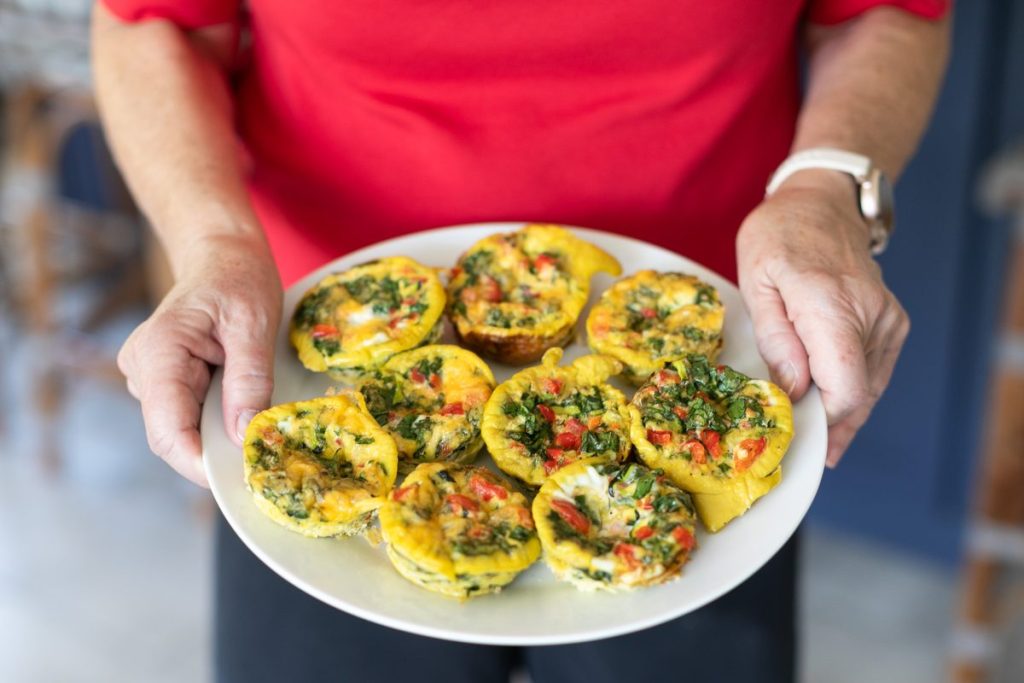
Calories: 370 cals; Fat: 25g; Carbs: 7g; Protein: 29g
Let these sit in the tin for 5 full minutes after they come out of the oven. That is the step most people skip, and then they wonder why half the muffin is still stuck to the pan. Bake at 350°F (175°C) until the centers are set and no longer jiggle, usually 20 to 22 minutes. Chop the broccoli small so it distributes instead of sitting in one corner. I make a dozen on Sunday and they hold five days in the fridge.
Prep ahead: Bake a full dozen on Sunday. Keeps 5 days refrigerated or 2 months frozen. Reheat 30 seconds from the fridge, 60 from frozen.
3. Breakfast Tacos with Microgreens
Macros per serving:
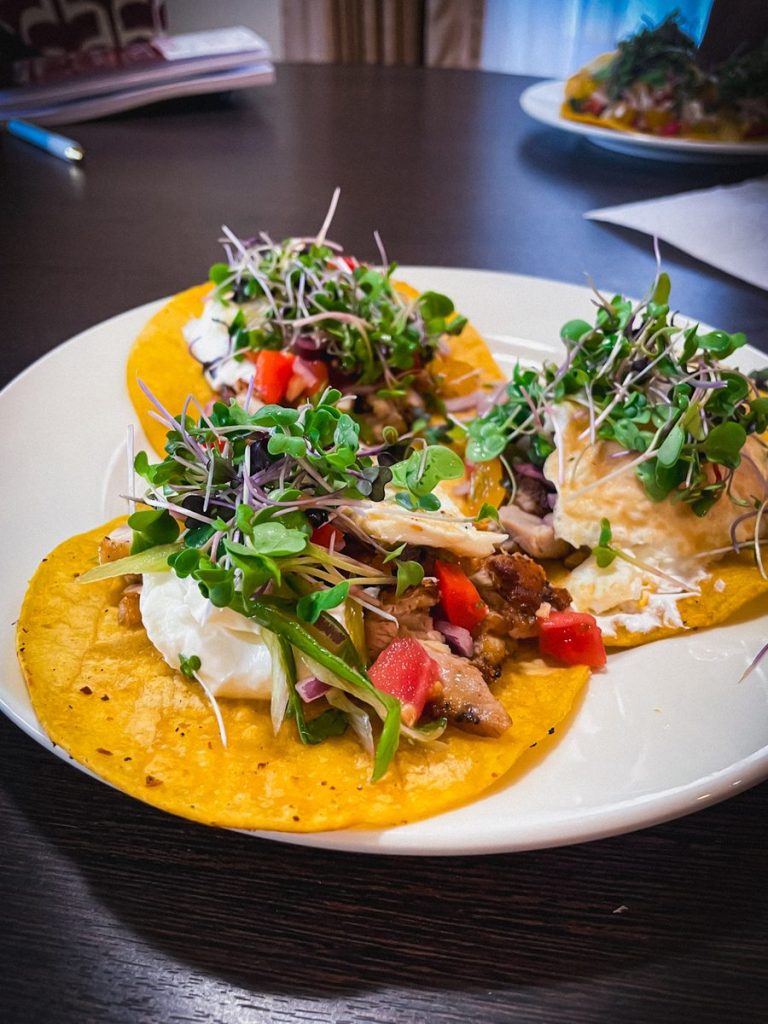
Calories: 395 cals; Fat: 16g; Carbs: 39g; Protein: 25g
I started putting microgreens on these because I had a container going soft in the fridge, and now I do not make them any other way. They add nothing to the macros and a surprising amount to the taste, which is a trade I will take every time. Warm the corn tortillas directly over the burner for about 15 seconds a side so they bend instead of cracking. Black beans do most of the work holding this together, and they are the cheapest thing on the plate.
Prep ahead: Cook the beans and the egg filling up to 3 days ahead and keep the tortillas and microgreens separate. Keeps 3 days. Reheat the filling 60 seconds and the tortillas over the burner for 15 seconds a side.
4. Greek Yogurt, Granola and Blueberry Bowl
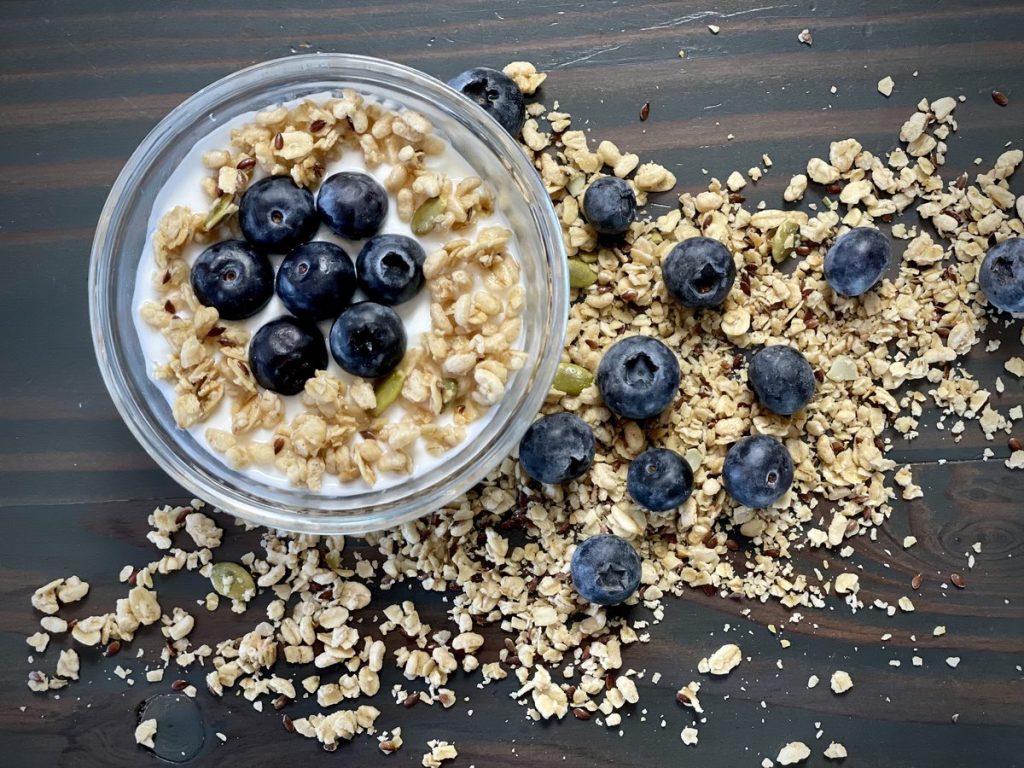
Macros per serving:
Calories: 340 cals; Fat: 8g; Carbs: 43g; Protein: 25g
Weigh the granola once and take a good look at what 40 grams actually is, because it is less than the amount your hand wants to pour. That single habit is the difference between this bowl landing at 340 calories and landing closer to 500. Nonfat Greek yogurt carries the protein, so buy the plain tub and sweeten it yourself with the berries. Presentation counts for more than I like to admit here, and a bowl that looks like something makes it easier to eat the same breakfast twice in a week.
Prep ahead: Portion the yogurt into jars up to 4 days ahead and keep the granola in a separate bag. Keeps 4 days. No reheat, and do not add the granola until you are eating or it goes soft.
5. Chocolate Chia Seed Pudding
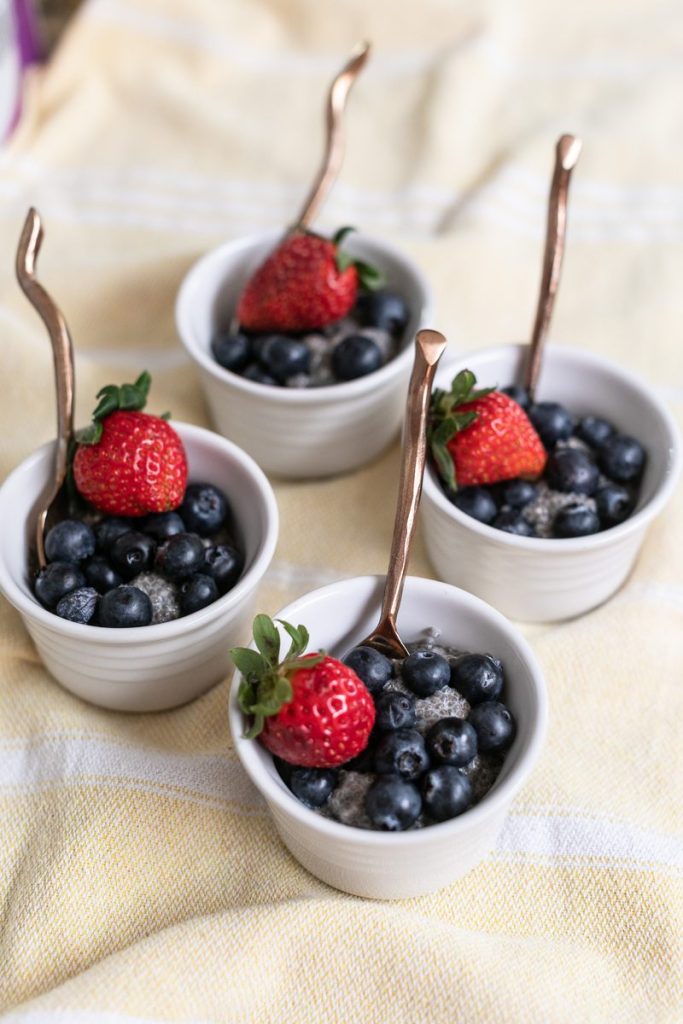
Macros per serving:
Calories: 230 cals; Fat: 13g; Carbs: 27g; Protein: 8g
This is the lowest protein item on the list and I have kept it anyway, because it is the only thing that reliably kills a chocolate craving at 9 p.m. Stir it once, wait 10 minutes, then stir it again before it goes in the fridge, otherwise the seeds clump at the bottom into a solid layer. Overnight is the minimum. A scoop of protein powder whisked into the almond milk will push it past 25 grams if you need it to pull more weight.
Prep ahead: Mix it at night, since it needs at least 8 hours to set. Keeps 5 days refrigerated. No reheat, this is a cold dish.
6. Savory Yogurt Bowl with Soft Egg
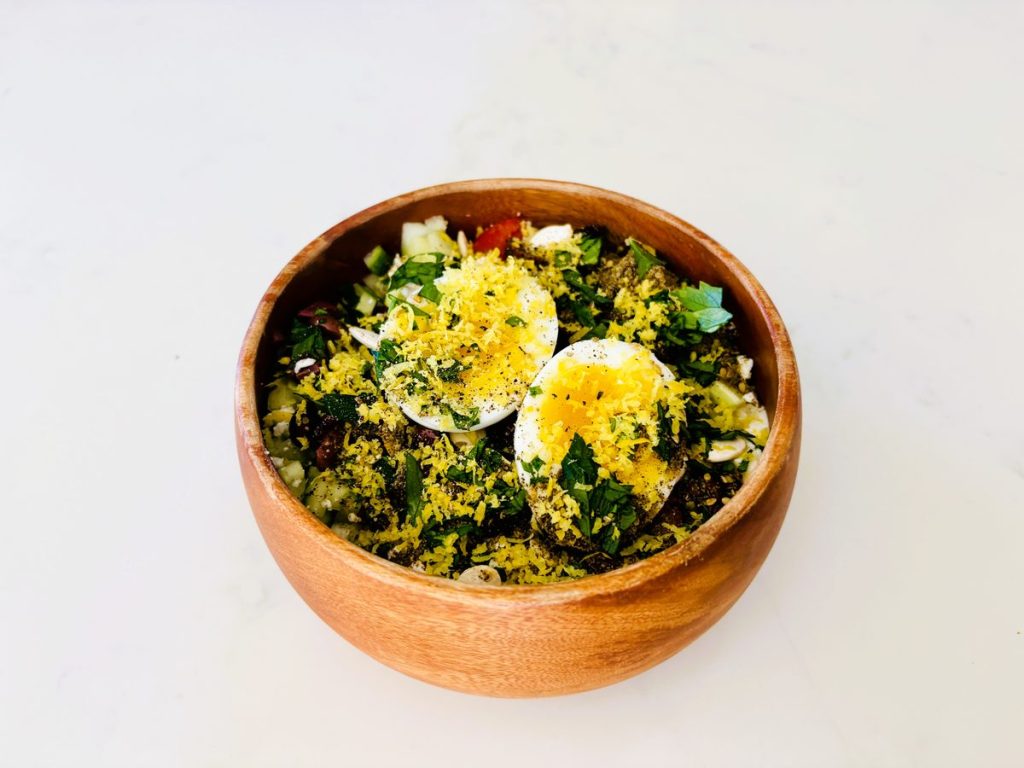
Macros per serving:
Calories: 245 cals; Fat: 13g; Carbs: 9g; Protein: 23g
Savory yogurt sounds wrong until you have had it, and then it is just breakfast. Use the 2% tub rather than nonfat here, because there is nothing else in the bowl to carry flavor. A 6 minute egg is the target, cooked so the white is firm and the yolk still runs when you cut it. Cucumber, olive oil, salt, and that is the whole thing, ready in less time than the coffee takes.
Prep ahead: Boil a batch of 6 minute eggs and leave them unpeeled. Eggs keep 5 days, but an assembled bowl only 1 because the cucumber weeps. No reheat, build it cold in 3 minutes.
7. Breakfast Burrito Bowl
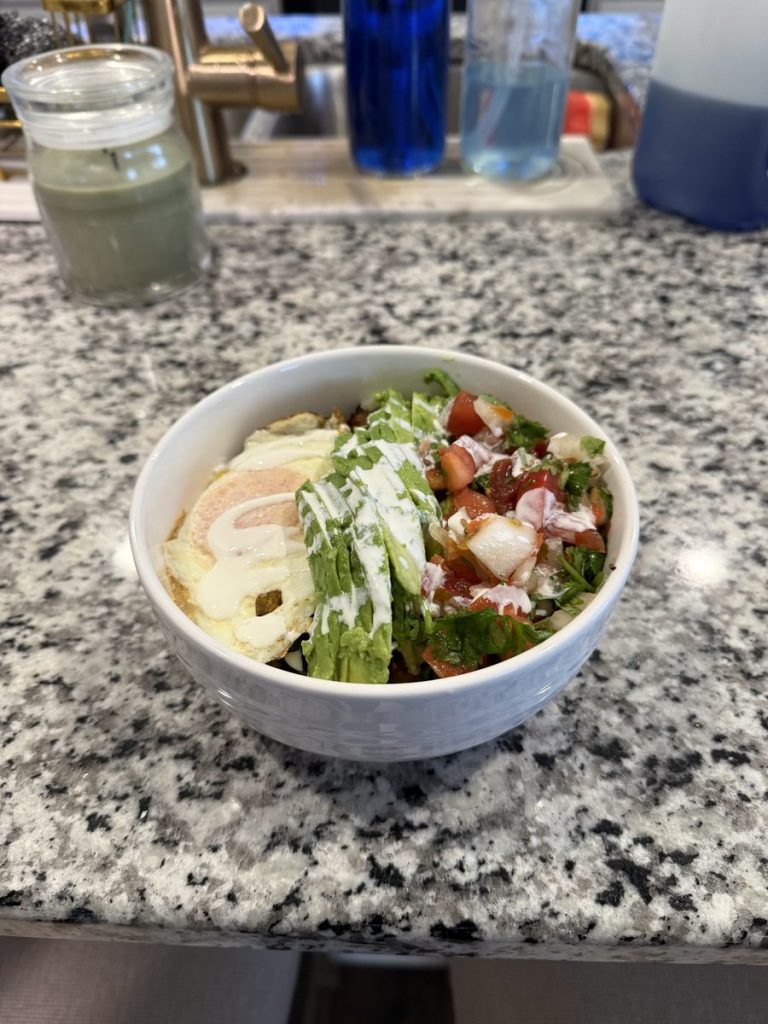
Macros per serving:
Calories: 425 cals; Fat: 15g; Carbs: 49g; Protein: 24g
I make everything in this bowl except the eggs on Sunday, then scramble fresh in the morning while the rice reheats. Rice and beans keep beautifully for four days and eggs do not, which is the only real rule for prepping this one. Keep the avocado to about 30 grams, because it is the ingredient most likely to quietly double the fat number. Salsa does the job of a dressing for almost no calories, so use more of it than you think you need.
Prep ahead: Rice, beans and salsa on Sunday, eggs scrambled the morning of. Base keeps 4 days. Reheat the base 90 seconds covered, then add the fresh egg and avocado.
Macro Friendly Lunch Recipes
8. Turkey Hummus Wrap with Edamame
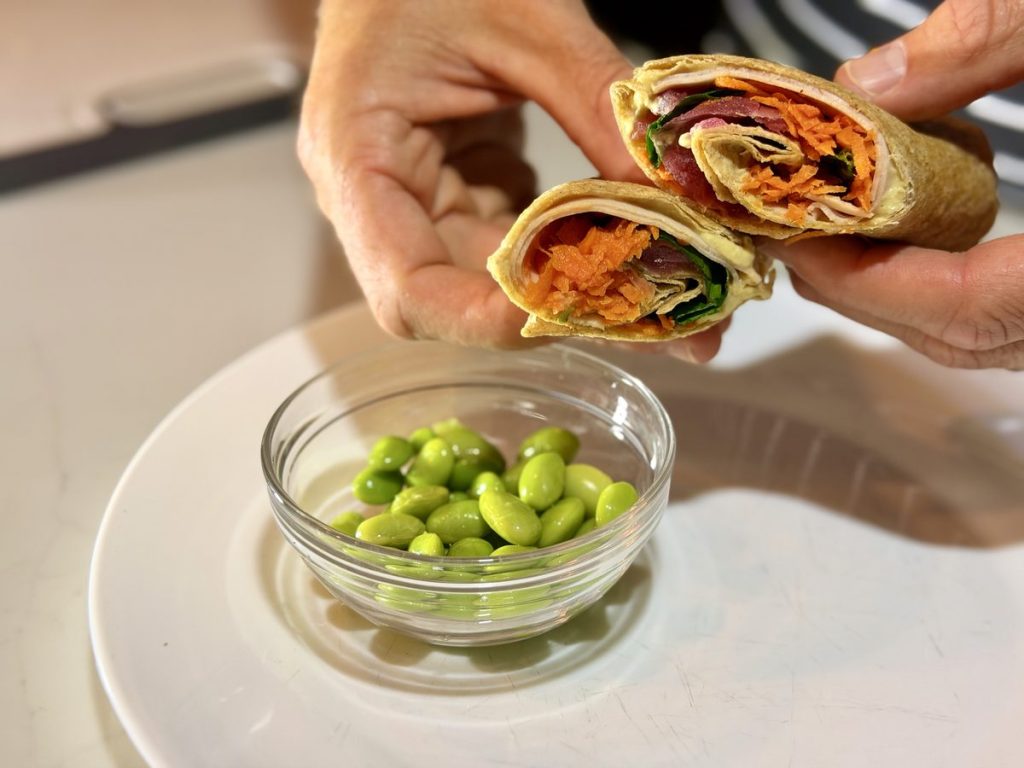
Macros per serving:
Calories: 410 cals; Fat: 13g; Carbs: 44g; Protein: 32g
Roll it tight and roll it in parchment, then cut it in half through the paper so it holds together in a bag. Deli turkey varies more than almost anything else in this list, so check the label and buy the one without added sugar if you can find it. Edamame on the side is what takes this from a snack to a lunch, and it adds 9 grams of protein for very little else. This is what I pack when I know I will be eating in the car.
Prep ahead: Roll it the night before in parchment. Wrap keeps 2 days, edamame 4. No reheat, this is a cold lunch.
9. Grilled Chicken, Quinoa and Roasted Vegetables
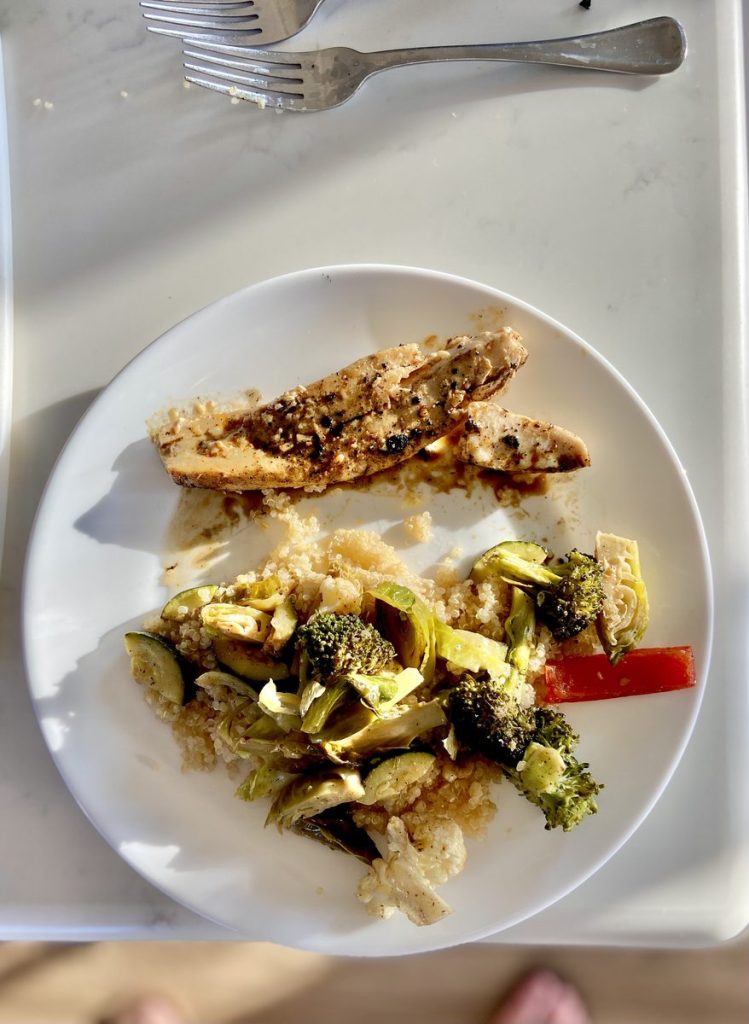
Macros per serving:
Calories: 475 cals; Fat: 14g; Carbs: 39g; Protein: 45g
Forty five grams of protein in a container you assembled in ten minutes is the whole argument for meal prep. Roast the vegetables hotter than feels right, 425°F (220°C), so they caramelize instead of steaming into a sad pile. Cook the quinoa in broth rather than water and you will never need to add anything to it. I portion five of these on Sunday and I have never once regretted it by Thursday.
Prep ahead: Roast, grill and portion five containers in one Sunday session. Keeps 4 days refrigerated. Reheat 2 minutes covered, stirring once at the halfway mark.
10. Tuna and White Bean Salad
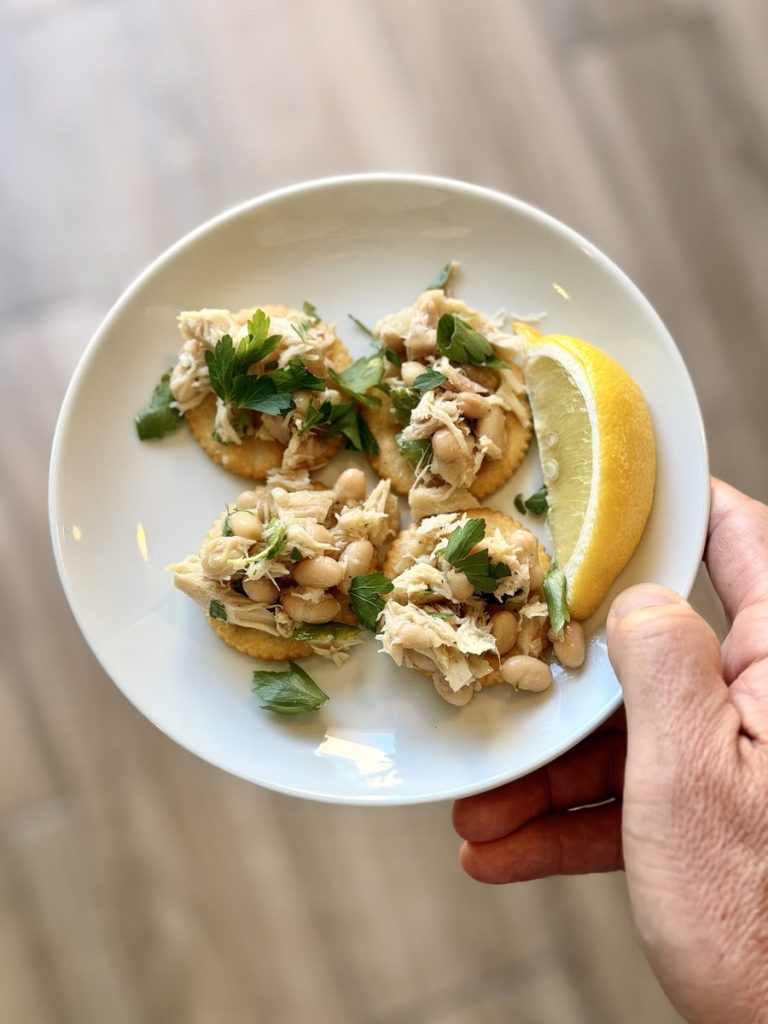
Macros per serving:
Calories: 365 cals; Fat: 10g; Carbs: 33g; Protein: 38g
Almost 40 grams of protein for under $3 a serving, and it requires no cooking at all. Rinse the beans properly, which means until the water runs clear, or the whole bowl tastes faintly of the can. Red onion needs a few minutes in the lemon juice before everything else joins it, and that small wait is what keeps it from bullying the tuna. Parsley is not a garnish here, so use a real handful.
Prep ahead: Mix the whole thing up to 2 days ahead, because it improves overnight. Keeps 3 days. No reheat, and add the parsley the day you eat it.
11. Greek Chickpea, Olive and Feta Salad Bowl
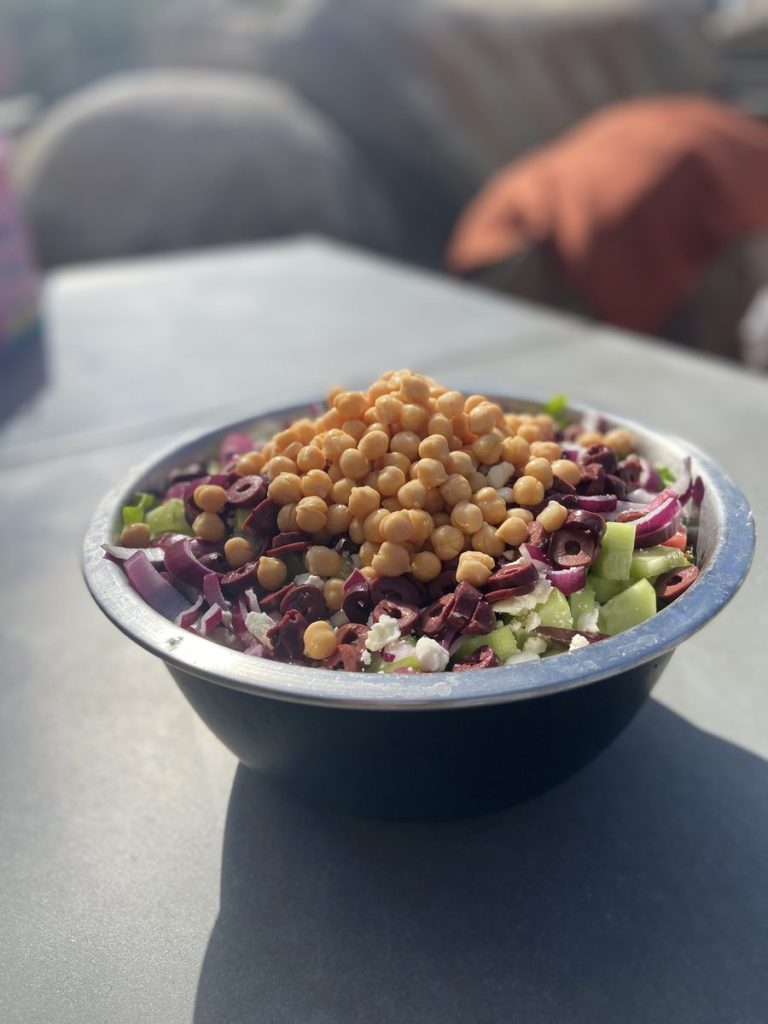
Macros per serving:
Calories: 420 cals; Fat: 21g; Carbs: 44g; Protein: 17g
Salt the cucumber and tomato and let them sit in a colander for 10 minutes before they go in the bowl. This is the step most people skip and then they open the container at noon to find their salad swimming. Olives and feta together mean you need very little olive oil, so 8 grams is plenty and it is already counted. The chickpeas will hold their texture for three days, which is longer than any leafy salad manages.
Prep ahead: Salt and drain the vegetables, then combine everything except the feta. Keeps 3 days. No reheat, eat it straight from the fridge.
12. Tuna, Lemon and Parsley Pasta
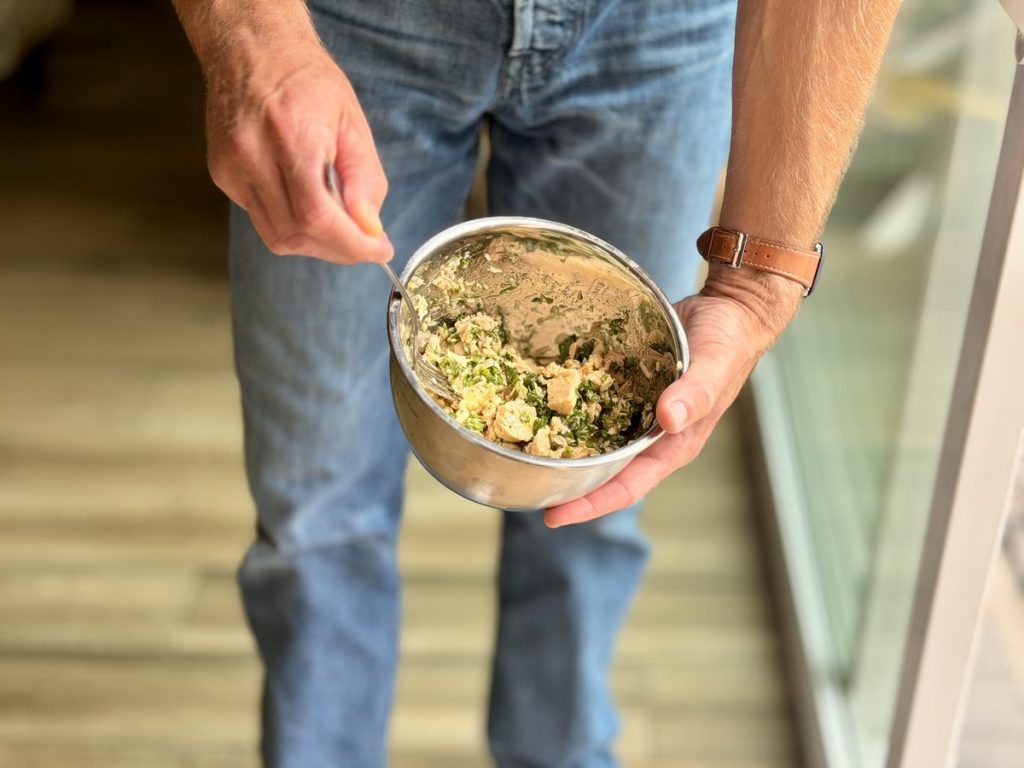
Macros per serving:
Calories: 405 cals; Fat: 10g; Carbs: 47g; Protein: 30g
Save a cup of the pasta water before you drain, because that starchy water is what turns oil and lemon into an actual sauce. Without it you get pasta with oil sitting on top of it, which is a different and much worse dish. Sixty grams of dry pasta is one honest serving, and I weigh it every single time because I cannot eyeball it. Garlic goes in for 30 seconds at the end, not the beginning.
Prep ahead: Cook the pasta and toss it in a little of the oil so it does not clump. Keeps 3 days. Reheat 90 seconds covered with a splash of water, or eat it cold, which I actually prefer.
13. Chickpea, Feta and Cucumber Pesto Bowl
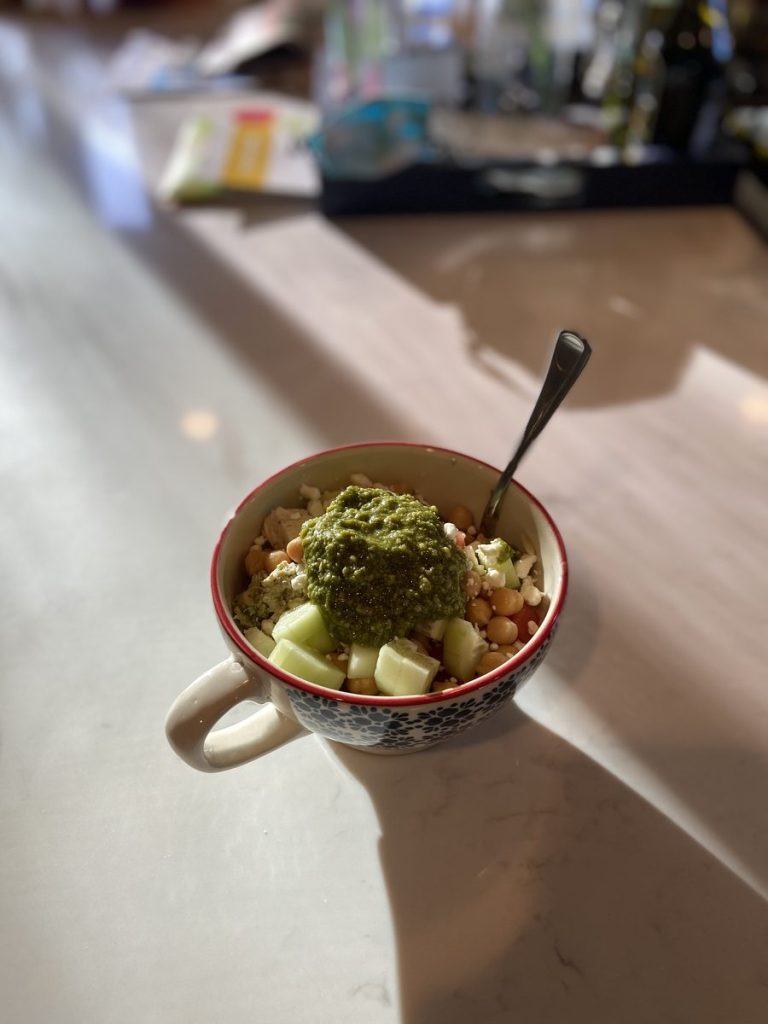
Macros per serving:
Calories: 380 cals; Fat: 17g; Carbs: 41g; Protein: 17g
Twenty grams of pesto is a tablespoon and change, and it is doing a lot of work for its size. Pesto is calorie dense enough that a heavy hand here will add 200 calories without changing how the bowl tastes much at all. Thin it with a spoonful of the chickpea liquid so it coats everything instead of clinging in clumps. Cold, straight from the fridge, is how this is meant to be eaten.
Prep ahead: Build the whole bowl up to 3 days ahead, pesto and all. Keeps 3 days. No reheat, this one is meant to be cold.
14. Sliced Grilled Chicken
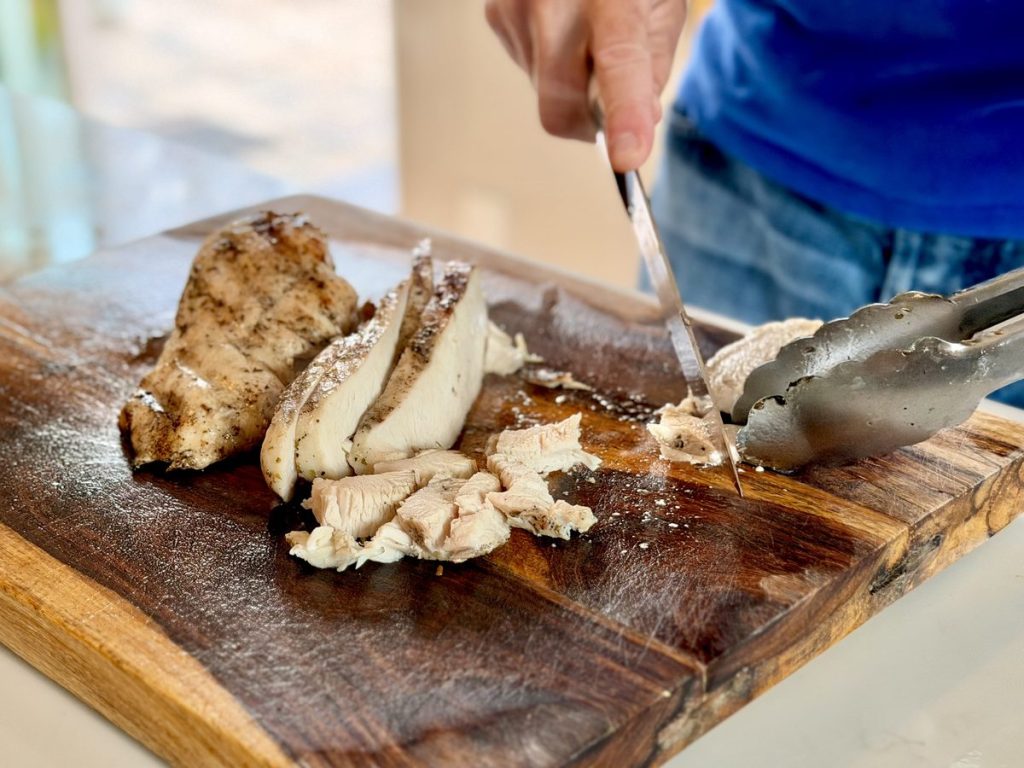
Macros per serving:
Calories: 275 cals; Fat: 10g; Carbs: 0g; Protein: 43g
Grill the breasts whole and slice them after, never before, because a sliced breast on a grill is a dry breast by definition. Pull them at 160°F (71°C) and let carryover heat finish the job while they rest. This is the plainest thing on the list and it is here because some days the answer is protein and a vegetable and nothing else. Pound the thick end flat first so the whole breast cooks at one speed.
Prep ahead: Grill four breasts at once and slice only what you are eating. Keeps 4 days whole, 3 days sliced. Reheat 60 seconds covered, or slice it cold onto a salad.
Macro Friendly Dinner Recipes
15. Glazed Chicken Breast over Farro
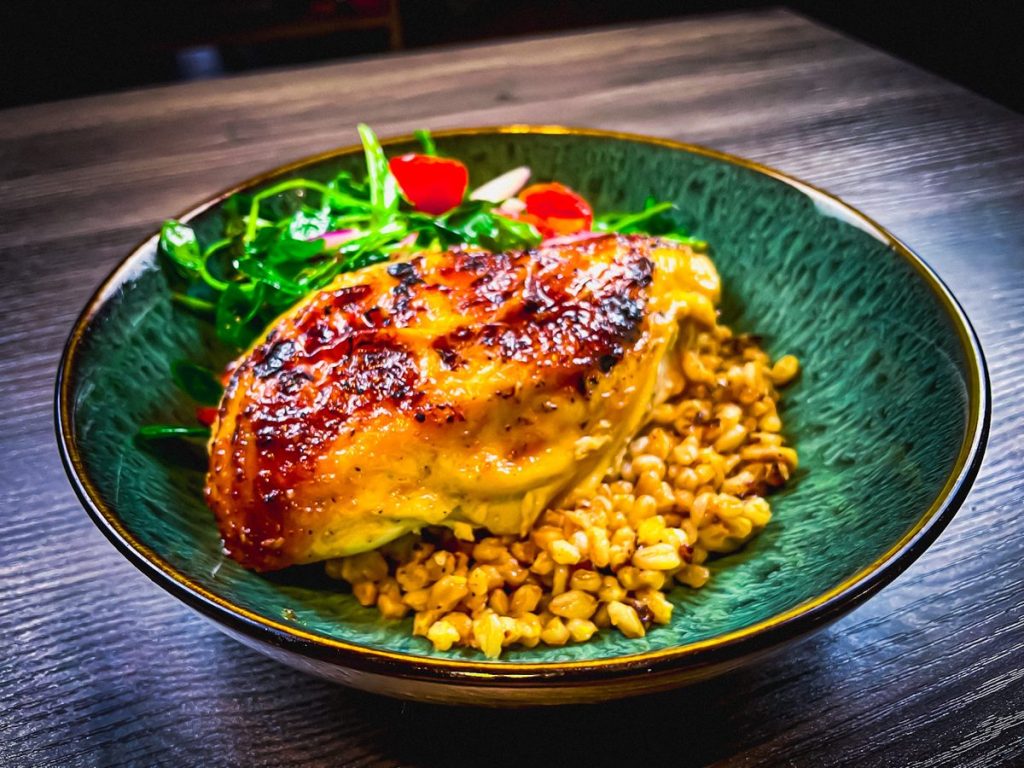
Macros per serving:
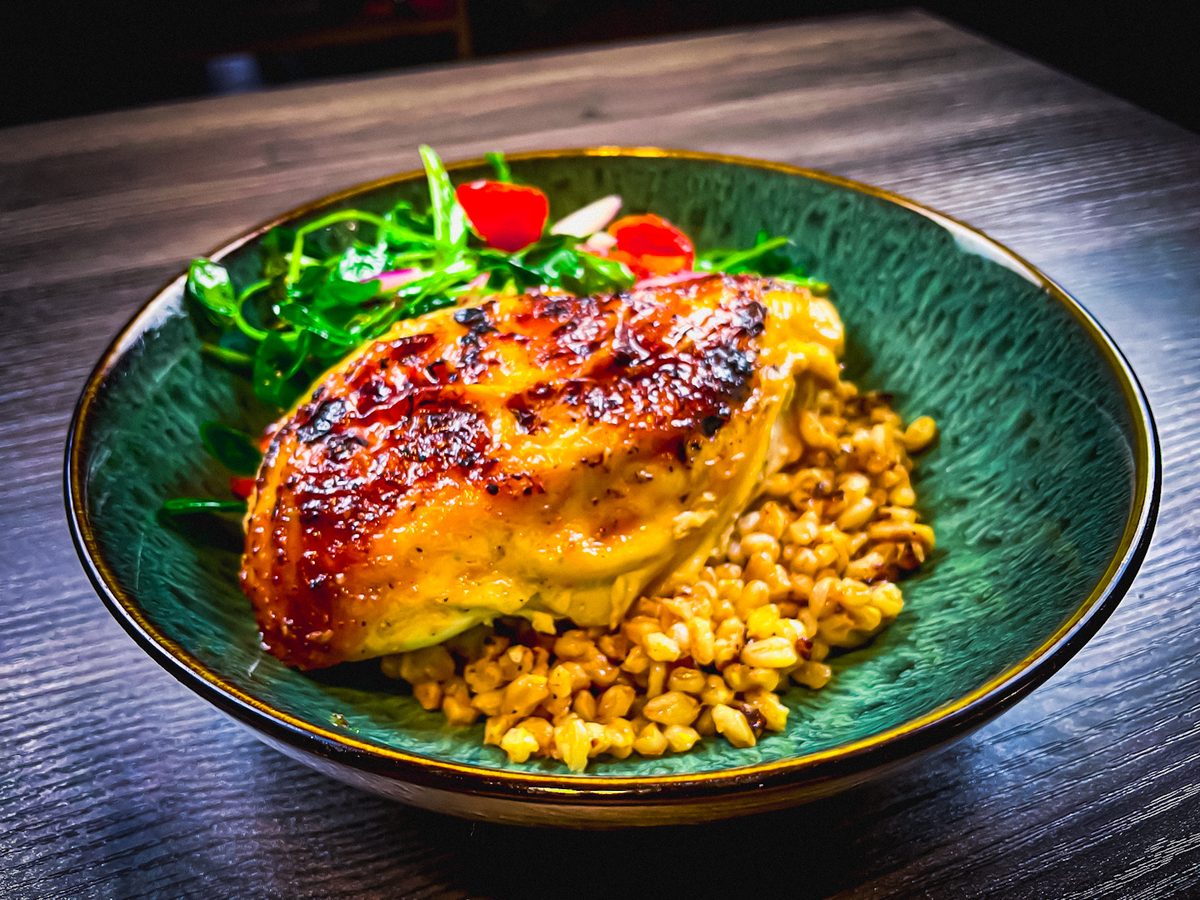
Calories: 465 cals; Fat: 10g; Carbs: 49g; Protein: 45g
Soy sauce and honey reduce into a glaze in about 90 seconds, and at about 100 seconds they become a burnt sheet of sugar welded to your pan. Watch it the entire time. Farro has more chew than rice and it holds up in a container without going gluey, which is why it is here instead of rice. Forty five grams of protein against 49 grams of carbs makes this a good one for the day you actually trained.
Prep ahead: Cook the farro and reduce the glaze up to 4 days ahead. Keeps 4 days assembled. Reheat 2 minutes covered with a spoon of water to loosen the farro.
16. Lemon Herb Chicken
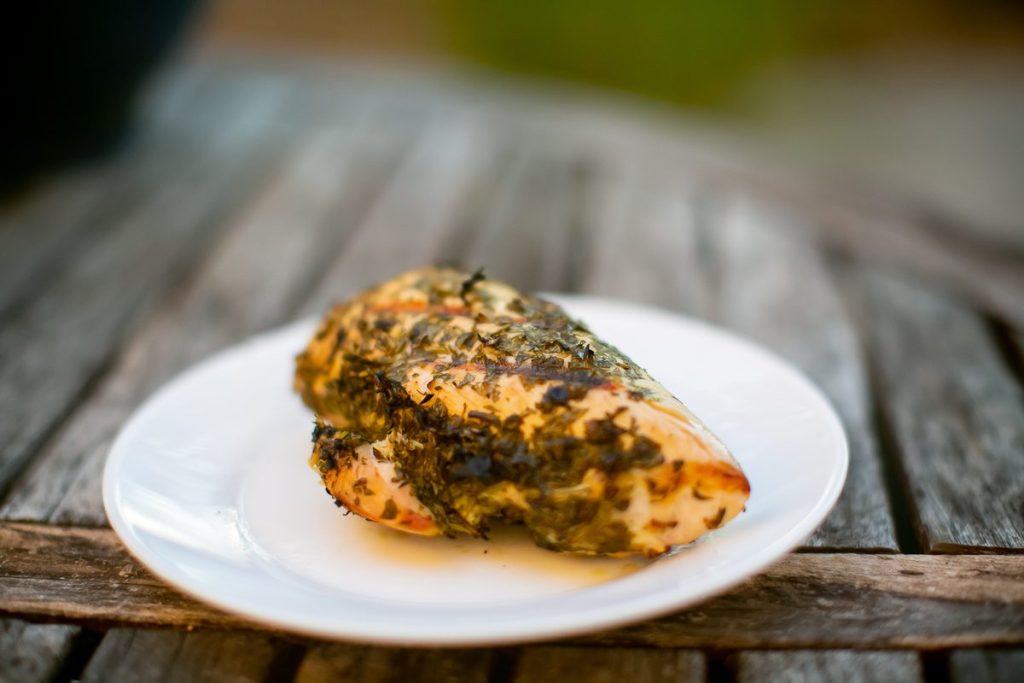
Macros per serving:
Calories: 295 cals; Fat: 12g; Carbs: 1g; Protein: 44g
Lemon juice goes on after the chicken comes off the heat, not before. Acid in a marinade for more than 30 minutes starts cooking the outside of the breast and it turns chalky, which is the opposite of what anyone wants. Fresh herbs, olive oil, salt, and heat is the entire recipe. I make this at least once a week and I have stopped pretending I need a more interesting one.
Prep ahead: Cook the chicken plain and hold the lemon until serving. Keeps 4 days. Reheat 60 seconds covered, then the lemon goes on after.
17. Whole Roast Lemon-Herb Chicken
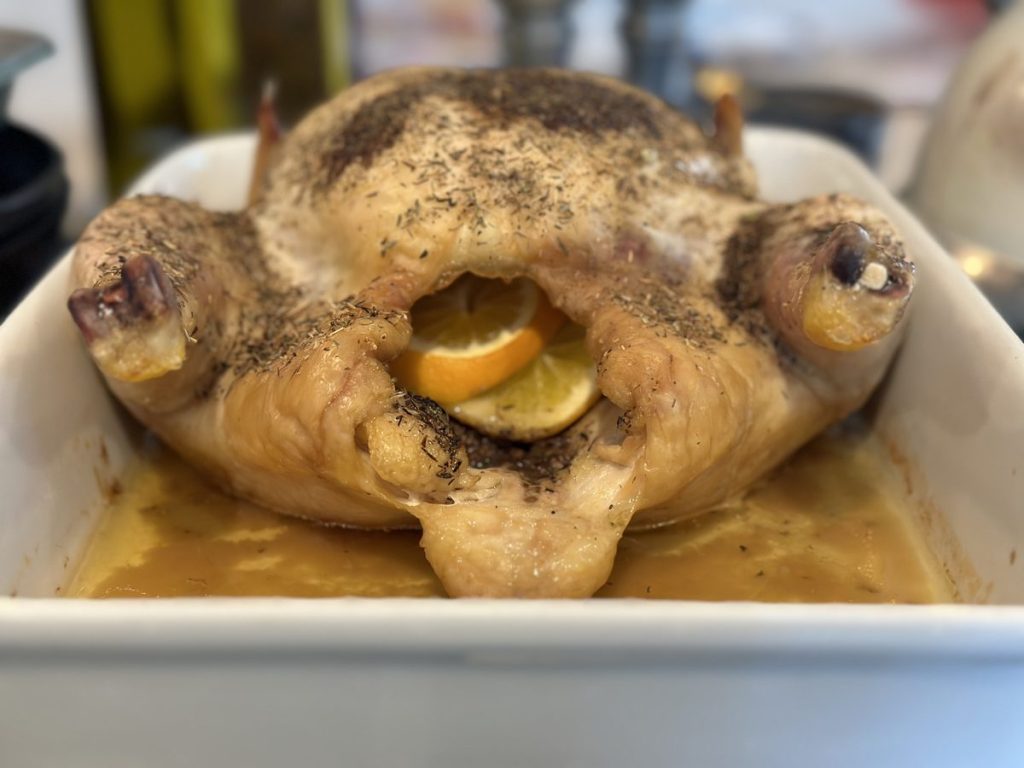
Macros per serving:
Calories: 405 cals; Fat: 25g; Carbs: 1g; Protein: 41g
A whole roast chicken is the cheapest protein in this article by a wide margin and it produces four days of lunches as a side effect. Roast at 425°F (220°C) for the first 20 minutes, then drop to 375°F (190°C) until the thigh reads 165°F (74°C). The skin is counted in the 25 grams of fat, so if you are cutting hard, pull it off and the number drops considerably. Keep the carcass and make stock, because throwing it away is throwing away the best part.
Prep ahead: Roast it Sunday and pull all the meat that night rather than leaving it on the bone. Keeps 4 days pulled. Reheat 90 seconds covered with a splash of stock so it does not dry out.
18. Slow Cooker Bolognese
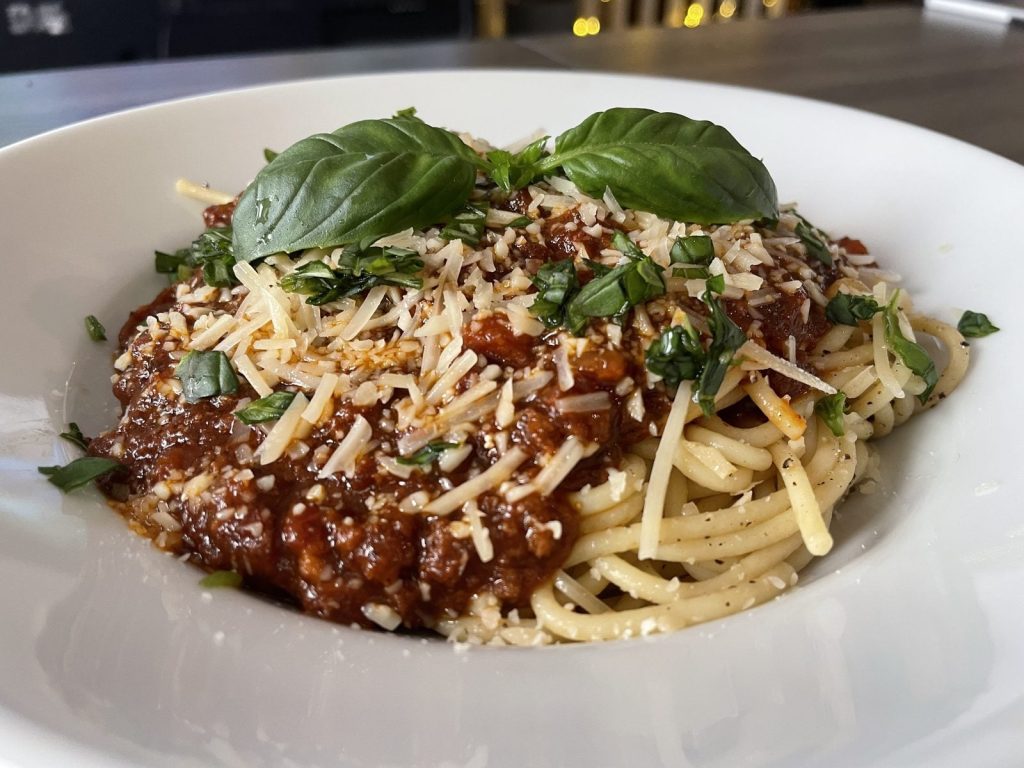
Macros per serving:
Calories: 490 cals; Fat: 13g; Carbs: 55g; Protein: 36g
Brown the beef in a pan before it goes anywhere near the crock. Skipping that is why most slow cooker bolognese tastes flat, since a crock pot can simmer but it cannot brown anything. 95% lean beef keeps this at 13 grams of fat, which is what makes a pasta dinner fit a cut at all. 55 grams of dry pasta per person, weighed, or the whole calculation quietly falls apart.
Prep ahead: Make the sauce up to 4 days ahead and cook the pasta fresh each time. Sauce keeps 4 days refrigerated or 3 months frozen. Reheat the sauce 3 minutes on the stove.
19. Slow Cooker Turkey Chili
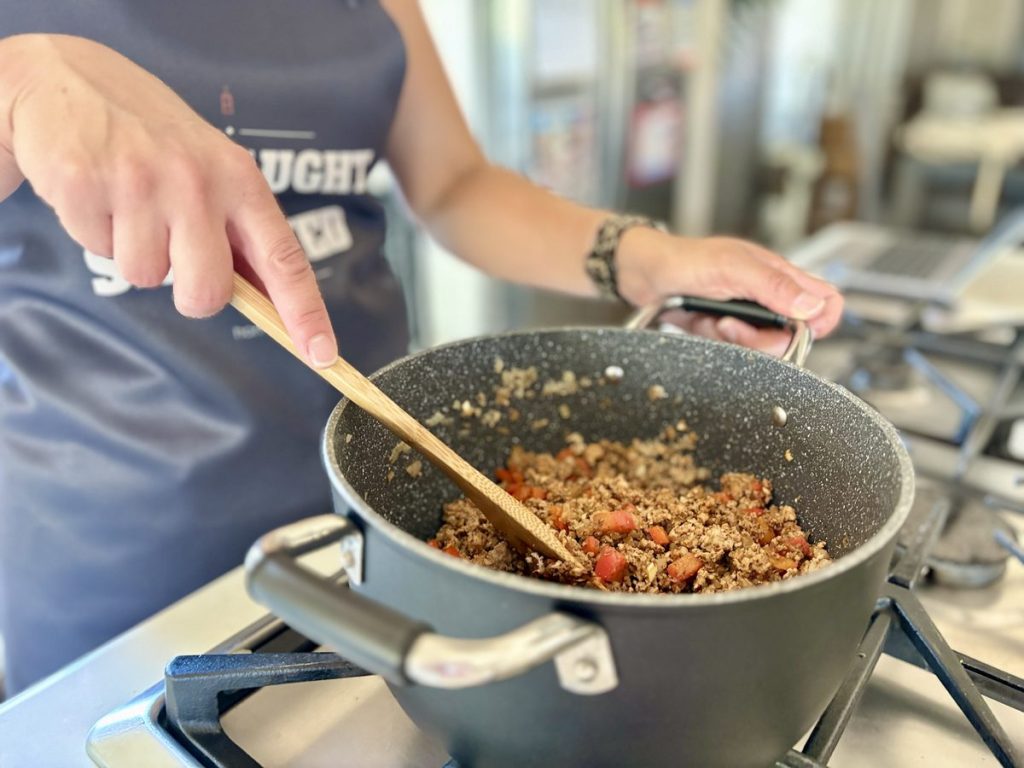
Macros per serving:
Calories: 380 cals; Fat: 14g; Carbs: 34g; Protein: 31g
93% lean ground turkey is the sweet spot here, because the 99% stuff goes dry and grainy over eight hours in a slow cooker. Bloom the chili powder and cumin in the pan with the turkey for a minute before everything goes in the crock. Dry spices dumped straight into liquid taste dusty, and it is a difference you can taste from across the room. This freezes better than anything else on the list.
Prep ahead: Make a full batch and freeze half in single portions. Keeps 5 days refrigerated or 3 months frozen. Reheat 3 minutes covered from the fridge, or thaw overnight first from frozen.
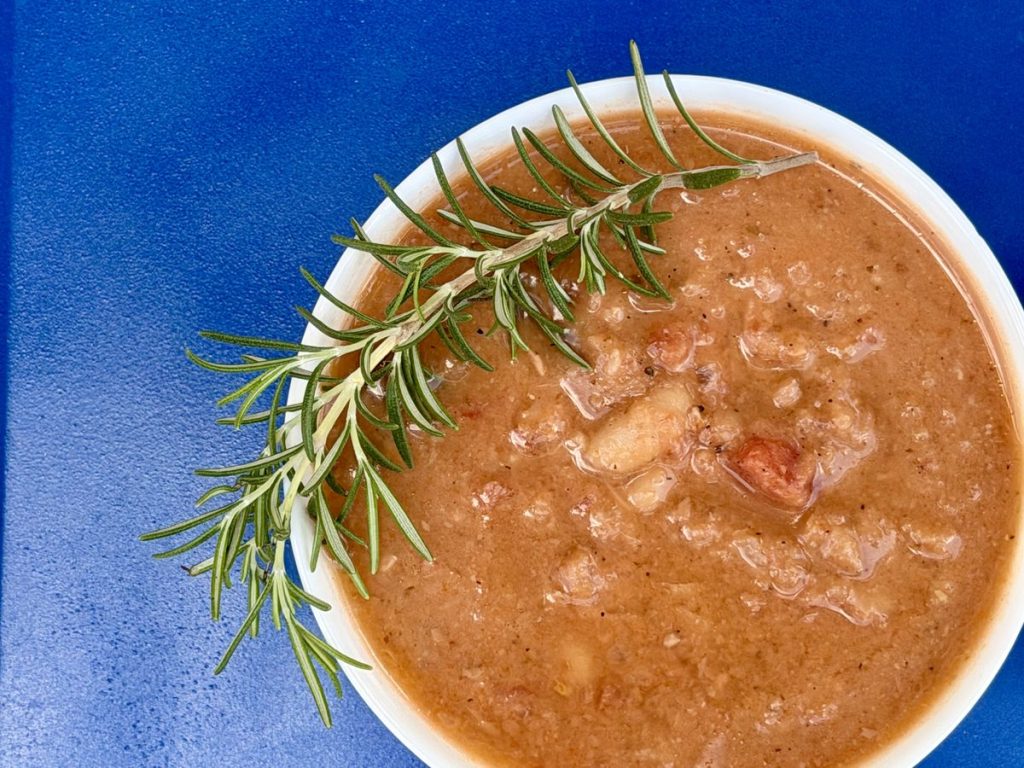
20. Slow Cooker White Bean and Rosemary Stew
Macros per serving:
Calories: 380 cals; Fat: 9g; Carbs: 58g; Protein: 19g
Under $2 a serving, which is worth saying out loud about a dinner carrying 19 grams of protein. One sprig of rosemary, not three, and pull it out before serving, because rosemary left in for eight hours turns medicinal. Mash about a quarter of the beans against the side of the crock at the end and the whole stew thickens without a spoonful of flour. Vegetarian by accident rather than by design, which I think is usually the way to do it.
Prep ahead: Make it Sunday, since it is better on day two. Keeps 5 days refrigerated or 3 months frozen. Reheat 3 minutes covered with a splash of water, because it thickens as it sits.
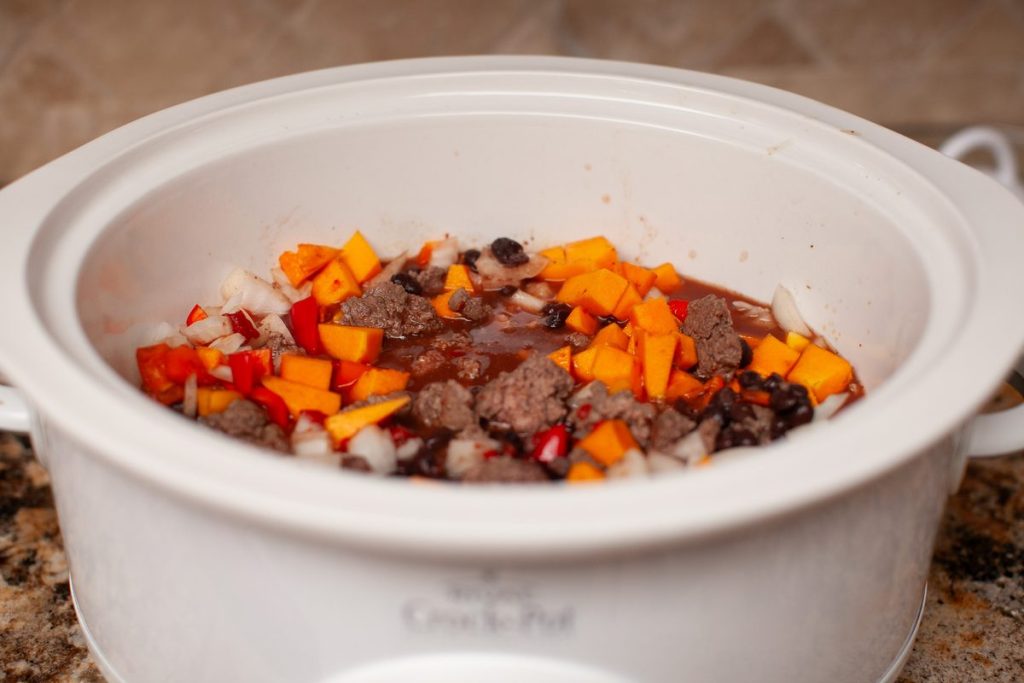
21. Slow Cooker Beef and Butternut Chili
Macros per serving:
Calories: 400 cals; Fat: 14g; Carbs: 39g; Protein: 31g
Cut the butternut into three quarter inch cubes, no smaller, or it will dissolve into the chili and you will be eating orange sludge. Stew beef is the right cut here and it costs less than anything you would grill, because eight hours in a crock is exactly what it needs. The squash brings a sweetness that plays against the chili powder in a way I did not expect the first time I made it. Kidney beans round the protein out to 31 grams.
Prep ahead: Eight hours in the crock, then portion straight into containers while it is still hot. Keeps 5 days refrigerated or 3 months frozen. Reheat 3 minutes covered, stirring once.
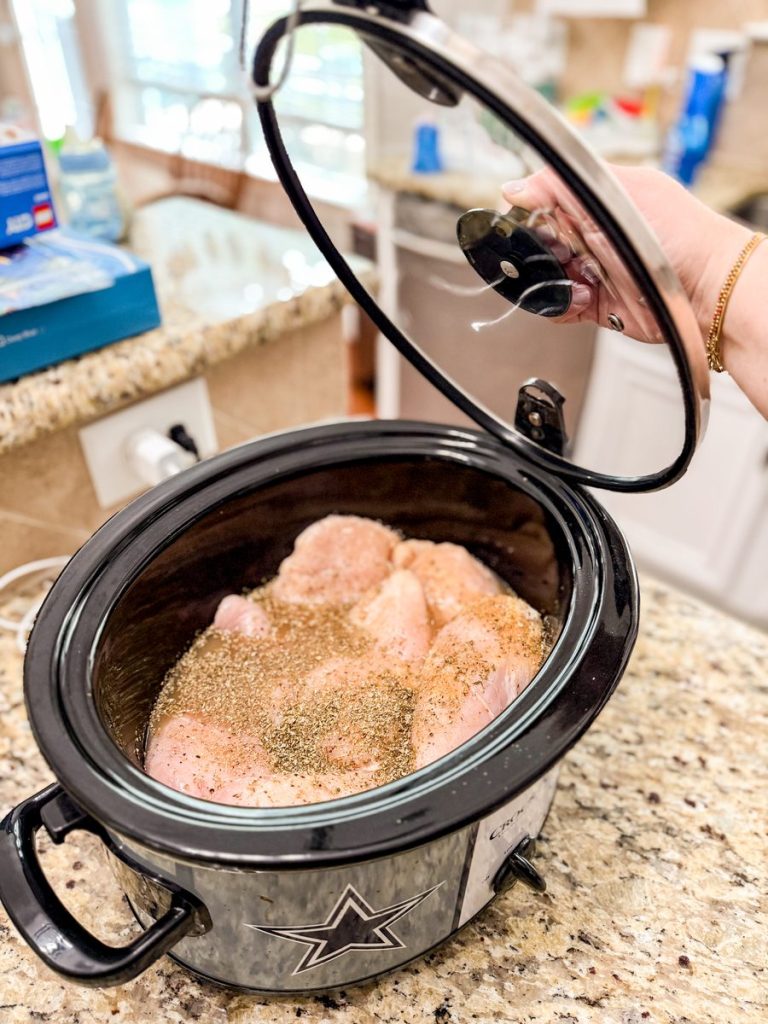
22. Crockpot Chicken Breasts
Macros per serving:
Calories: 235 cals; Fat: 5g; Carbs: 0g; Protein: 44g
Two hours on low, not six. Chicken breast is the one thing a slow cooker will actively ruin if you leave it in all day, and there is no rescuing it once it has gone stringy. Sixty grams of broth is all the liquid it needs, because the breasts release plenty of their own. At under $2 a serving for 44 grams of protein this is the most efficient thing in the article and also the most boring, and both of those are true at the same time.
Prep ahead: Two hours on low, then slice or shred and portion immediately. Keeps 4 days refrigerated. Reheat 60 seconds covered with a spoon of the cooking broth.
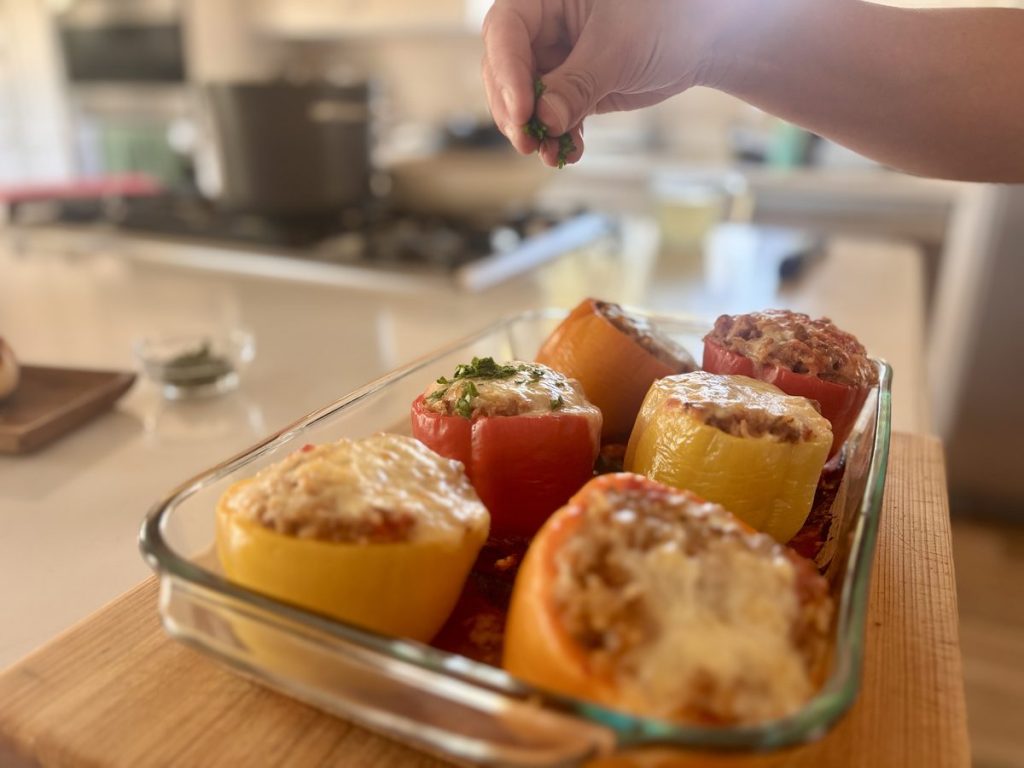
23. Quinoa and Vegetable Stuffed Peppers
Macros per serving:
Calories: 365 cals; Fat: 10g; Carbs: 51g; Protein: 17g
Par-bake the empty peppers for 15 minutes before you stuff them, or you end up with a cooked filling sitting inside a raw pepper. Quinoa and black beans together do the protein work and the mozzarella is there for structure as much as for taste. These reheat better than they have any right to, which is unusual for a stuffed vegetable. Six peppers, one tray, and lunch is handled for most of the week.
Prep ahead: Assemble them unbaked and refrigerate up to 2 days, or bake the full tray Sunday. Keeps 4 days baked. Reheat 2 minutes covered, or 20 minutes at 350°F (175°C) if you want the top back.
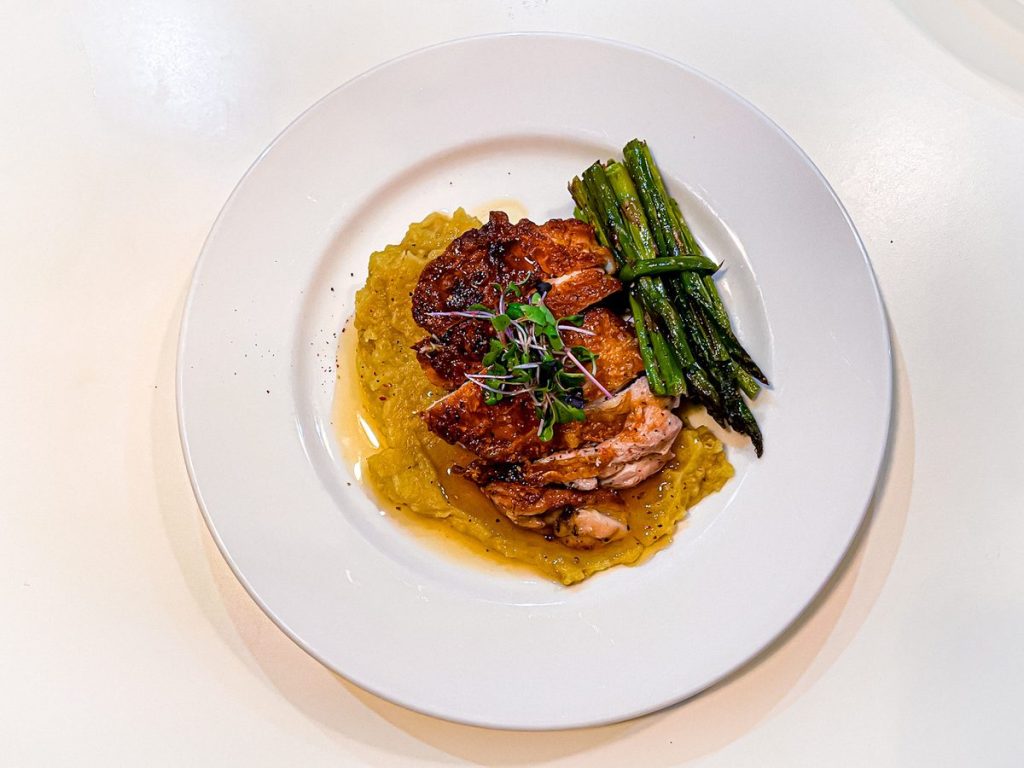
24. Seared Salmon with Asparagus
Macros per serving:
Calories: 385 cals; Fat: 25g; Carbs: 7g; Protein: 34g
Most of the 25 grams of fat here is the omega-3 kind, which is the reason this fits a cut despite the number looking high. Dry the skin with a paper towel until it is genuinely dry before it hits the pan. That part is non-negotiable, because a wet fillet steams and you will never get the crust. Skin side down in a hot dry pan for about 4 minutes, then 90 seconds on the flesh side, and it is finished.
Prep ahead: Trim the asparagus ahead, but sear the salmon the day you eat it. Keeps 2 days, the shortest window on this list. Reheat 60 seconds at half power, or eat it cold and flaked over greens.
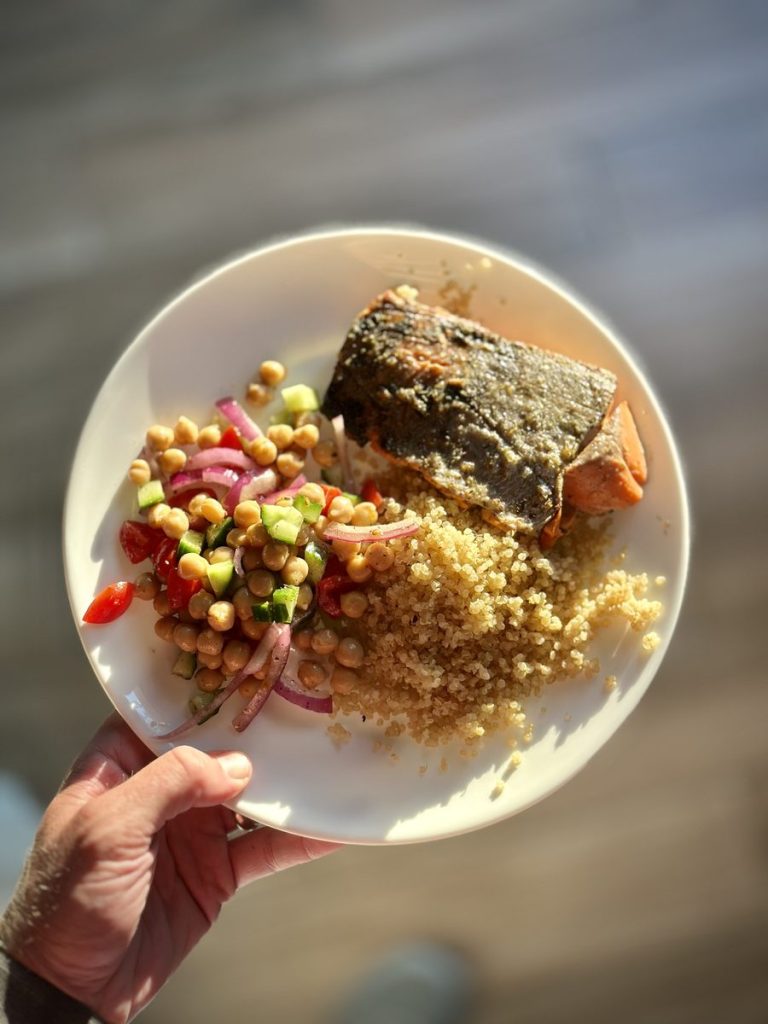
25. Grilled Salmon with Quinoa and Chickpea Salad
Macros per serving:
Calories: 545 cals; Fat: 25g; Carbs: 42g; Protein: 37g
At 545 calories this is the biggest plate in the article, and it is the one I build when dinner is the only real meal of the day. The quinoa and chickpea salad is better after a night in the fridge, so make it the day before and grill the salmon fresh. Cold salad against warm fish is the entire point, so do not reheat the base. Lemon at the table, not in the bowl.
Prep ahead: Make the quinoa and chickpea salad a day ahead and grill the salmon fresh. Salad keeps 4 days, salmon 2. No reheat for the salad, and 60 seconds at half power for the fish.
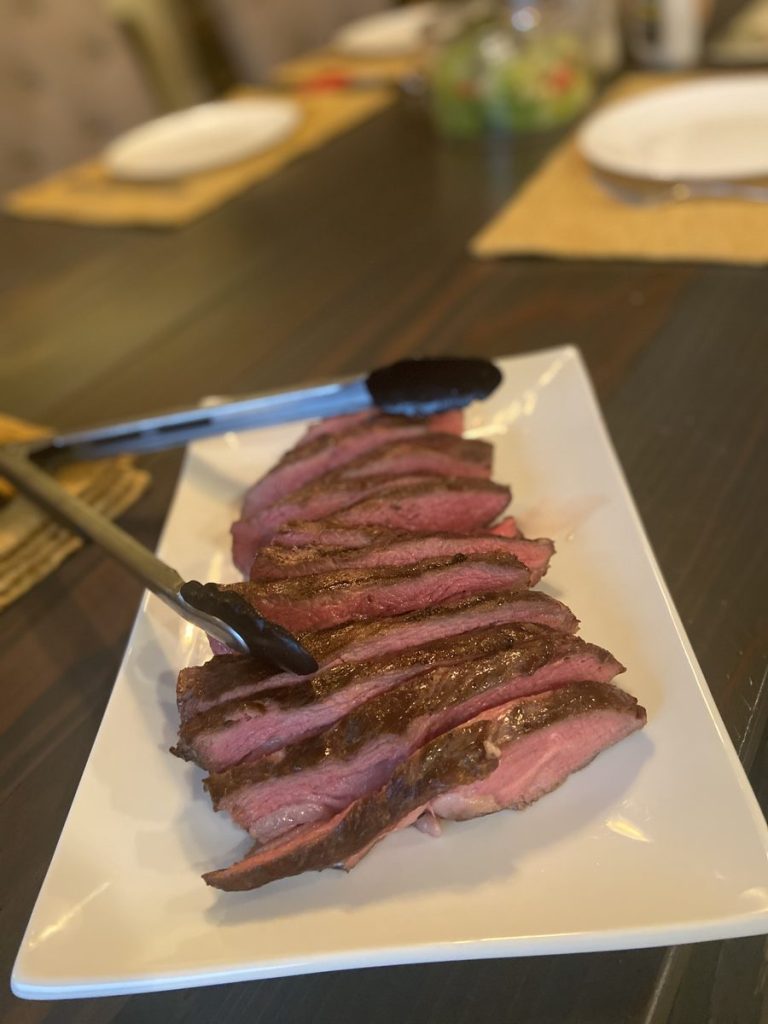
26. Sliced Flank Steak
Macros per serving:
Calories: 335 cals; Fat: 17g; Carbs: 0g; Protein: 43g
Rest it for 10 minutes and then slice it thin against the grain. Both halves of that are non-negotiable, and getting the grain direction wrong will make a perfectly cooked flank steak chew like a belt. Flank is lean enough to hit 43 grams of protein at 335 calories, which is not something you can say about most steak. Salt it an hour ahead if you have the hour.
Prep ahead: Cook and rest it whole, then slice only what you are eating. Keeps 3 days whole. Do not reheat it, really. Slice it cold and let it sit out 10 minutes, because reheating turns lean steak grey.
Macro Friendly Snacks
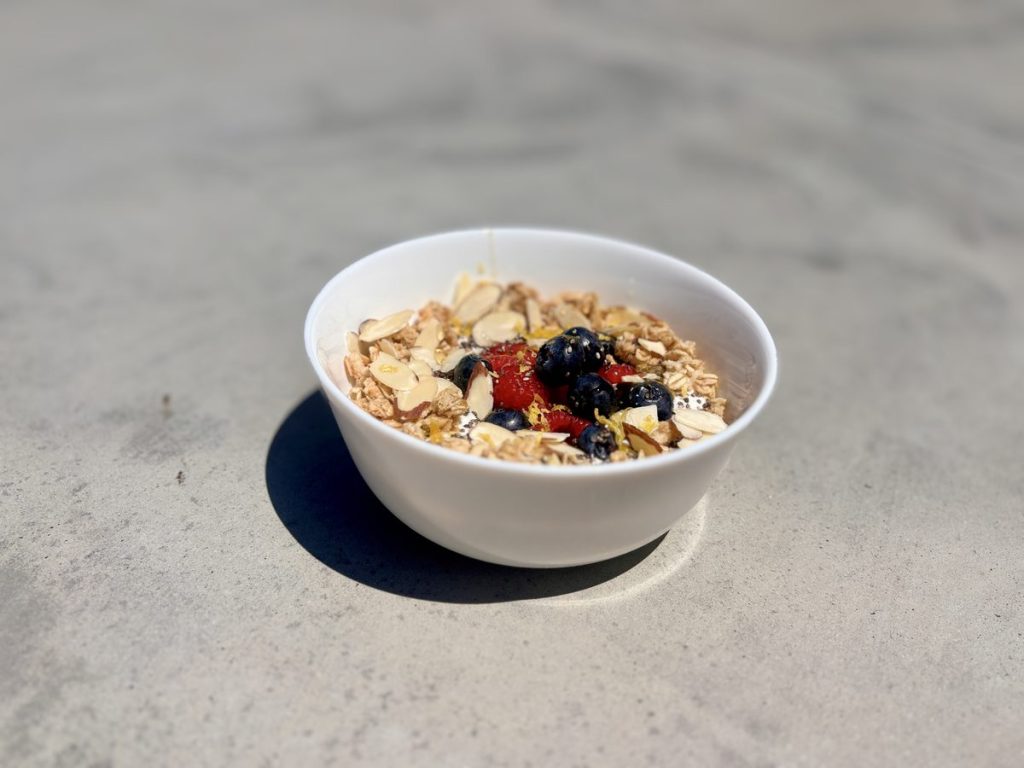
27. Cottage Cheese Bowl with Berries and Almonds
Macros per serving:
Calories: 295 cals; Fat: 12g; Carbs: 22g; Protein: 26g
Cottage cheese has come back around and I have stopped being embarrassed about liking it. Twenty six grams of protein in a bowl that takes ninety seconds to build is difficult to argue with. Fifteen grams of almonds is roughly twelve nuts, and counting them out is less annoying than it sounds once you have done it twice. Buy the 2% rather than the nonfat, because nonfat cottage cheese is a texture problem nobody has solved.
Prep ahead: Portion the almonds into small bags so the morning build is 90 seconds. Assembled keeps 1 day, components 5. No reheat.
28. Grilled Shrimp with Chimichurri
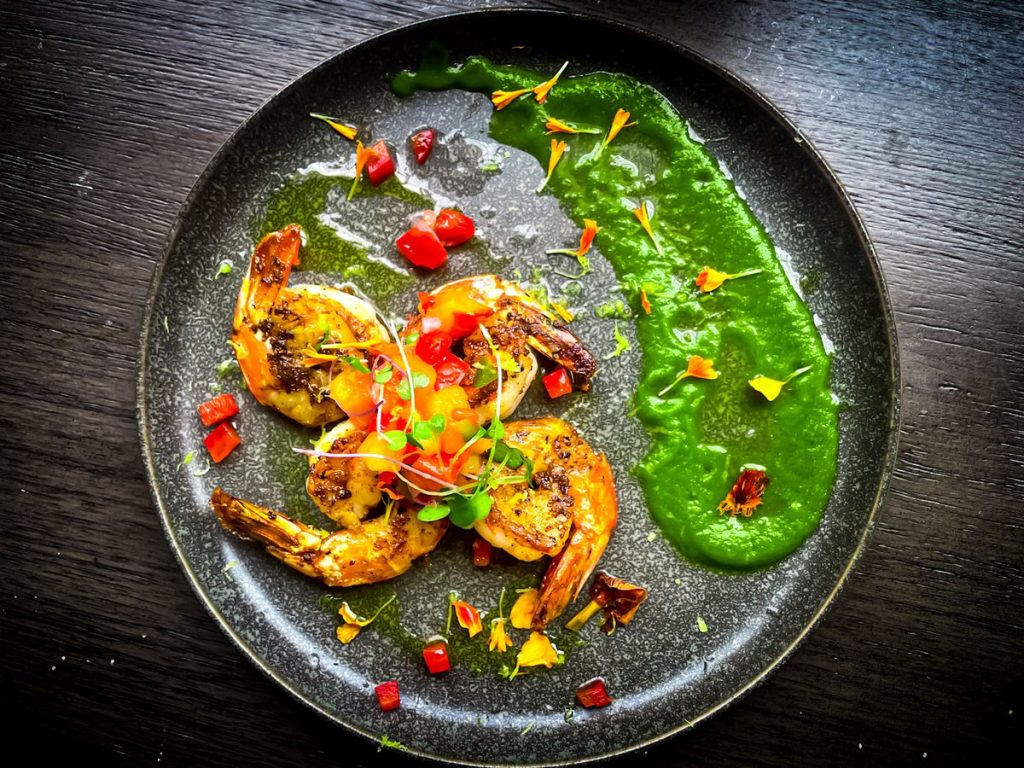
Macros per serving:
Calories: 235 cals; Fat: 12g; Carbs: 1g; Protein: 30g
Ninety seconds a side and shrimp are done, and at three minutes a side they are erasers. Chimichurri is mostly olive oil, so 25 grams is the portion and it is already counted in the numbers above. Make the sauce an hour ahead so the garlic and the parsley have time to get to know each other. Thirty grams of protein for 235 calories makes this a snack that eats like a meal, which is the only kind worth prepping.
Prep ahead: Make the chimichurri up to 5 days ahead, because it only gets better. Cooked shrimp keep 2 days. No reheat, eat them cold with the sauce, since reheated shrimp turn rubbery.
What is the Best Macro Ratio for Weight Loss?
Unfortunately, there is no one-size-fits-all approach to this. I lift heavy 3 times a week. To get a six-pack by July I will have to reduce my total caloric and fat intake and moderate my carbs to appropriate levels. I have had success in the past with 40/40/20: 40% of daily calories from carbs, 40% from protein, and only 20% from fat. The last time this led to washboard abs in around 4 months. But that’s me.
According to McMaster University, research participants had great results with a 50c/35p/15f split. Notice how similar that is to my personal experience! If I were new to this, I would probably start somewhere around here, and then adjust as necessary.
What Should You Eat on a Macro Diet?
Anything, but not everything. If it fits your macros then you can work most foods into your diet, just keep the “bad” stuff to a minimum. Body composition is a direct result of your training and dietary habits. If you stuff yourself with pizza every day (because it fits your macros) then don’t expect to look like Schwarzenegger in his prime.
For the best results, you should eat lean meats, as many veggies as possible, healthy fats, and whole grains for carbs.
Try to find macro-friendly recipes for the foods you usually enjoy eating. This will help you to keep cheat meals in check.
Final Thoughts: Does the Macro Diet Work?
Yes, the macro diet does absolutely work. Most diets are macro diets in disguise.
Take keto for example. A keto diet looks something like this: 10c/30p/60f. Macro dieting is just a fancy way of saying that you eat in a way that helps your body break down fat. Apart from this, make sure that you are in a caloric deficit if you want to lose weight.
Find the ratio that works for you and you can take intuitive eating to a whole new level!